New stucco · Kingston & Ulster County
New three-coat stucco for additions, garages and homes
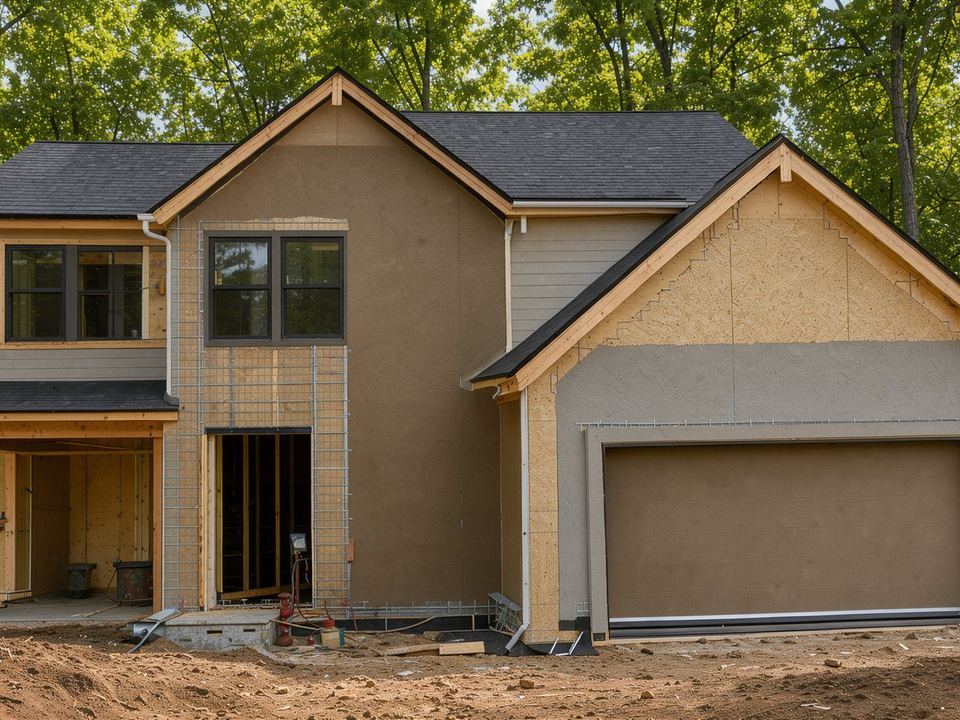
Traditional scratch, brown and finish stucco installed over modern drainage membranes, corrosion-resistant lath, weep screeds and expansion joints.
Call or text (845) 443-7902
Book spring work now. Winter assessments and estimates available.
Updated November 2026
Short answer
New cement stucco lasts when water behind the cladding has a clear path out and wall movement is relieved by joints. On additions, detached garages and custom houses around Kingston and Ulster County, we install dual-layer weather barriers or rainscreen mats, galvanized or stainless lath, weep screeds, casing beads and full three-coat stucco matched to existing walls or architect samples.
Key facts
- Service area
- Kingston and nearby Ulster County towns: Saugerties, Port Ewen, Rosendale, Hurley, Woodstock, Marbletown, Esopus and New Paltz.
- Season
- EIFS and stucco finishes need about 40 °F and rising, with no freezing for 24 hours. In the Hudson Valley that means spring through late fall.
- Who does the work
- Our own crews, from The Dom Construction Group LLC.
- Insurance
- General liability, umbrella and workers' compensation insurance; certificates on request.
- Estimates
- Free. Start with 3–5 photos by text, or use the form.
- Reply
- We reply within one business day, Monday to Friday.
Building a drainage plane behind modern three-coat stucco
Cement stucco sheds most rainwater off its outer face, yet wind-driven storms eventually push trace moisture through tiny pores or around window frames. What separates a long-lasting stucco wall from a problem wall is what sits directly behind the lath. Over wood or steel sheathing on new additions, garages and custom homes in Kingston, Woodstock, Saugerties, Marbletown and New Paltz, we install two independent layers of water-resistive barrier—or a dedicated entangled-mesh rainscreen drainage mat—lapped shingle-style into window pan flashings and kick-out diverters. Any moisture that passes the mortar hits that slip plane and drains harmlessly out the bottom rather than soaking OSB or plywood sheathing.
Weep screeds, casing beads and control joint layout
Hard-coat stucco shrinks slightly during initial hydration and expands and contracts with seasonal sun and cold. Metal or PVC trim accessories govern where that stress goes and how water exits:
- Foundation weep screeds set along the base of framed walls keep stucco held clear above soil and concrete paving so capillary moisture cannot wick upward into wood framing.
- Casing beads create crisp, straight terminations around window perimeters, door jambs and soffit lines, leaving a properly sized backer-rod and sealant joint instead of raw mortar butted tight against vinyl or aluminum frames, which always separates.
- Expansion and control joints break large wall elevations into balanced panels—especially aligned with window corners, gable transitions and floor rim joists—with lath cut cleanly behind the joint piece so the accessory actually relieves movement; read why continuous lath causes cracking in our stucco crack guide.
Tying new additions into existing stucco homes
Adding a mudroom, sunroom or attached garage onto an older stucco house presents two practical challenges: preventing a straight crack right down the framing seam and matching decades-old hand texture. Where new framing meets an existing house wall, we install an intentional expansion joint rather than trying to bridge two structures that settle at different rates. Once scratch and brown coats cure flat and true, we make physical sample boards on site—adjusting sand gradation and float timing—until the finish blends naturally, or we re-skim and coat the shared elevation so both halves match cleanly.
Framed walls, concrete block and insulated alternatives
Direct-applied stucco over new concrete masonry block garages or site walls skips wire lath when the block surface is clean, unpainted and suction-balanced, though block walls still need control joints aligned with masonry movement joints below. On framed houses or commercial buildings where owners or architects want continuous exterior insulation without thermal bridging, insulated drainage EIFS is a practical alternative worth weighing alongside traditional three-coat cement stucco, and our own crew installs both assemblies.
Base and finish stucco coats need temperatures around 40 °F and rising with 24 hours free of frost, though we review blueprints, coordinate window-flashing details with builders and provide written estimates in every season.
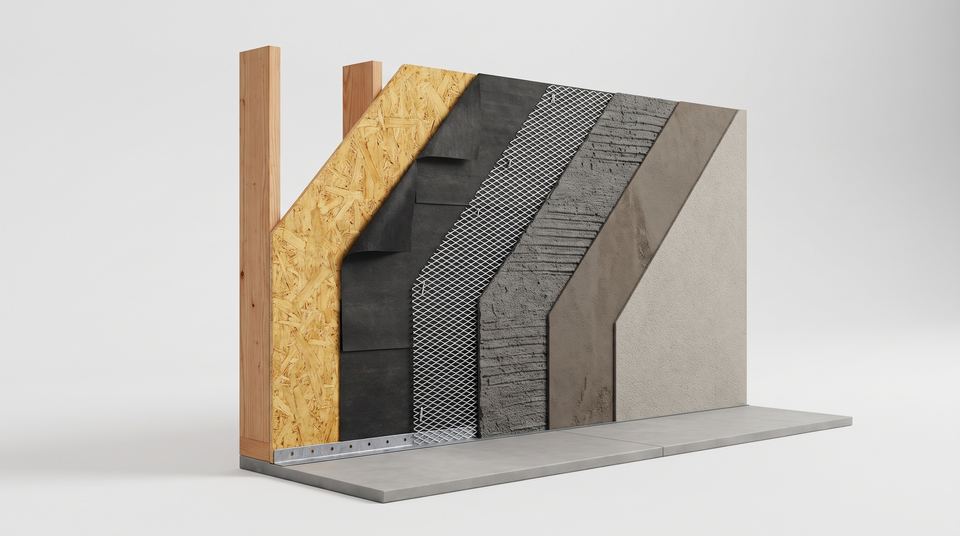
Sequence for a new three-coat stucco wall
Each layer has a specific job—draining water, anchoring mortar, building thickness and setting texture.
Drainage plane and flashings
Dual weather barriers or rainscreen drainage mat lap cleanly over window pans, head flashings and kick-outs.
Screeds, beads and metal lath
Foundation weep screeds, window casing beads, control joints and galvanized lath are mechanically fastened.
Scratch coat
The first mortar lift embeds fully into the metal lath and is horizontally scored to grip the next layer.
Brown coat
A rod-straightened second coat brings the wall to true plane around openings and cures before finishing.
Sample-matched finish coat
Acrylic or traditional cement finish is floated to match your approved texture sample or existing house.
Questions on new stucco builds and additions
What is the difference between traditional three-coat stucco and one-coat stucco?
Traditional three-coat cement stucco builds roughly seven-eighths of an inch across a scratch coat, a brown leveling coat and a finish coat over metal lath, giving high impact resistance and deep key into the lath. Proprietary one-coat systems apply a thinner fiber-reinforced base coat over foam or sheathing; we focus on full three-coat cement stucco and true drainage EIFS.
Why do new stucco walls need metal lines or joints across large gables?
Portland cement mortar shrinks slightly as hydration water evaporates during the first month, and large wall faces expand in summer sun. Control and expansion joints divide broad elevations into smaller panels—especially inline with window jambs and floor framing lines—so minor movement happens neatly inside a flexible joint piece instead of tearing random jagged cracks across open stucco.
How far off the ground or patio should new stucco stop?
Over wood- or steel-framed walls, stucco terminates into a perforated weep screed held at least four inches above soil or mulch and two inches above paved walkways, driveways or porch slabs. Keeping that gap open lets moisture behind the weather barrier drain freely and stops snowmelt or damp soil from wicking upward into wall framing.
When should a stucco crew get involved on a new addition?
Bringing the stucco contractor in while wall sheathing, window installation and roof edges are being detailed avoids costly rework later. Window head flashings, sill pans, kick-out diverters at eaves and deeper exterior trim jambs all have to accommodate roughly seven-eighths of an inch of stucco thickness plus the drainage plane behind the lath.
Price a new stucco addition or building
Send framing photos or elevation drawings along with the town and target schedule.
Ulster County towns for new stucco
- Kingston
- Saugerties
- Port Ewen
- Rosendale
- Hurley
- Lake Katrine
- Woodstock
- Marbletown
- Esopus
- New Paltz
Other Ulster and Dutchess County towns by arrangement
Planning an addition onto a stucco home?
Book spring work now. Winter assessments and estimates available.