Refinishing & coatings · Ulster County
Stucco refinishing, re-skimming and coatings in Kingston
When an older stucco house is structurally tight but chalky, mismatched from past patches or covered in map cracking, a full-elevation skim or coating brings back uniform color and weather resistance.
Call or text (845) 443-7902
Book spring work now. Winter assessments and estimates available.
Updated November 2026
Short answer
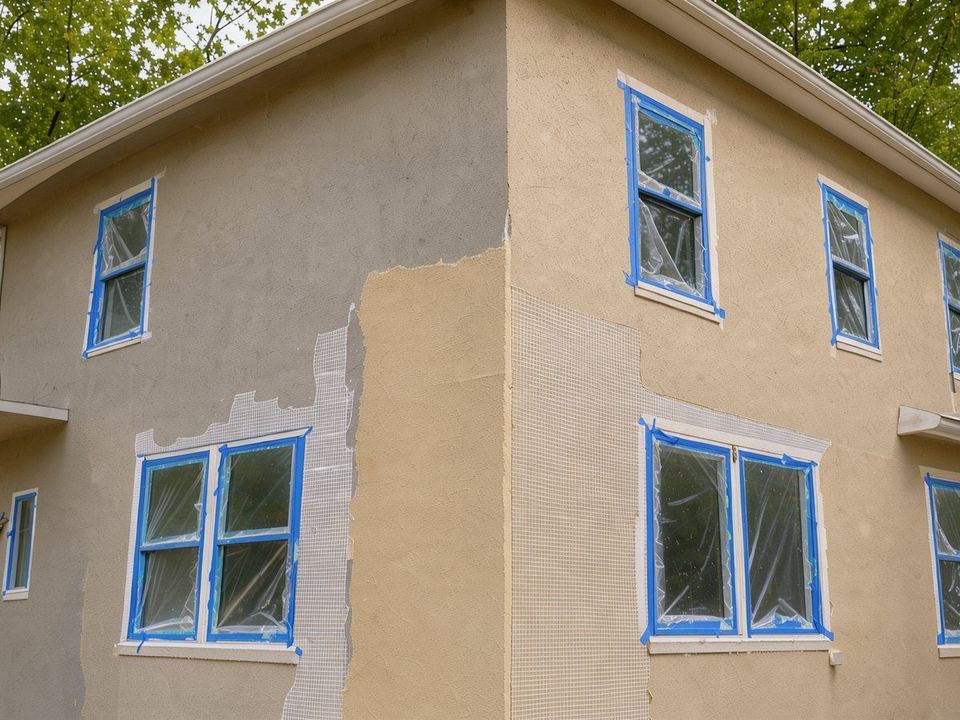
Weathered stucco that still bonds tightly to the wall does not need to be torn off. Across the Kingston area, we wash sound elevations, repair localized cracks first, and apply either a fresh acrylic or mineral finish coat, a fiberglass-reinforced skim coat, or an elastomeric coating matched to the wall's vapor needs. All coatings need 40 °F and rising temperatures.
Key facts
- Service area
- Kingston and nearby Ulster County towns: Saugerties, Port Ewen, Rosendale, Hurley, Woodstock, Marbletown, Esopus and New Paltz.
- Season
- EIFS and stucco finishes need about 40 °F and rising, with no freezing for 24 hours. In the Hudson Valley that means spring through late fall.
- Who does the work
- Our own crews, from The Dom Construction Group LLC.
- Insurance
- General liability, umbrella and workers' compensation insurance; certificates on request.
- Estimates
- Free. Start with 3–5 photos by text, or use the form.
- Reply
- We reply within one business day, Monday to Friday.
When a stucco house needs refinishing rather than tear-off
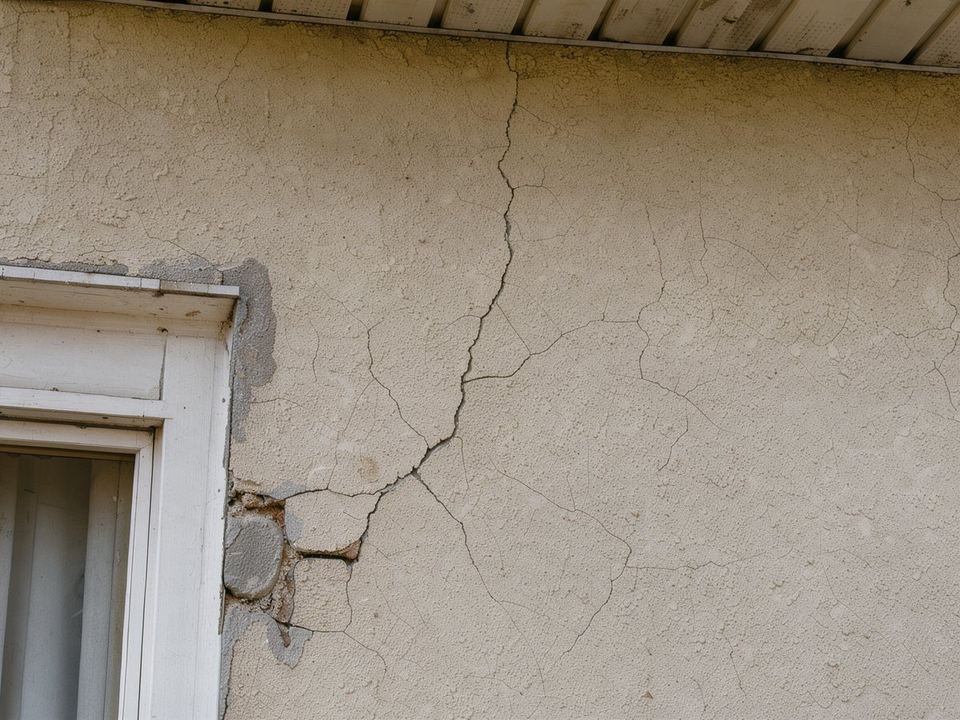
Plenty of stucco homes in Kingston, Woodstock, Saugerties and New Paltz have solid scratch and brown coats underneath a tired surface. Years of ultraviolet exposure bleach mineral pigments, shaded north walls hold algae and soot, and past window replacements or utility cutouts leave mismatched patches that catch afternoon light. As long as tapping confirms the stucco is still keyed firmly to its lath or masonry backup, stripping the wall down to framing wastes money and disturbs tight trim details.
Refinishing solves surface wear once active leaks are corrected. Before any bucket of coating opens, our crew checks roof-to-wall flashings, window perimeter sealants and control joints, cutting out any soft or hollow pockets under a targeted stucco repair scope—or a mesh cutout on synthetic EIFS walls—so fresh finish never goes over trapped dampness.
Skim coats, acrylic finishes and elastomeric coatings
Different walls call for different topcoats depending on crack patterns and texture goals:
- Fiberglass-reinforced skim and finish coat: When an elevation has rough, uneven patches or heavy swirl marks an owner wants calmed down, we embed alkali-resistant fiberglass mesh into a polymer-modified base coat across the entire plane and trowel a uniform sand or float finish from corner to corner.
- Pure acrylic stucco finish or masonry coating: Sound cement stucco that is merely faded, stained or chalky cleans up well with primer and a breathable acrylic finish coat, keeping natural sand grit visible without filling the texture flat.
- Elastomeric crack-bridging coating: Thick, flexible elastomeric membranes stretch across widespread non-structural hairline craze lines on modern Portland cement walls, shedding wind-driven rain across open valley exposures in Hurley, Rosendale and Esopus.
Keeping older masonry walls vapor-permeable
Not every stucco building should receive a thick elastomeric membrane. Pre-war brick and rubble-stone houses in the Stockade District, Rondout, Hurley and Marbletown lack interior vapor barriers and rely on outward evaporation through soft lime mortar. Sealing those walls with a low-perm rubberized film can trap interior winter humidity right behind the paint line until frost peels sheets of finish away. On older solid-masonry walls, we use high-permeability mineral silicate coatings or traditional lime-compatible finishes instead; read more on our historic house stucco page.
Surface washing, masking and scaffold access
Coating adhesion depends almost entirely on preparation. We wash away chalk, mildew and airborne dirt, scrape loose paint edges, prime high-suction patches so sheen stays even, and mask windows, bluestone sills, copper flashings, roofs and plantings tightly before trowels or rollers touch the wall. On two- and three-story gables, our own crew erects company-owned supported pipe scaffolding so we can keep a continuous wet edge from corner to corner rather than working off unstable ladders, renting boom or scissor lifts where site geometry calls for them.
Like all exterior stucco finishes, skim coats and coatings require about 40 °F and rising temperatures with 24 frost-free hours to cure properly, running from spring through late autumn across Ulster County.
Steps in a full-wall stucco refinish
Clean prep and repaired flashings come before any skim coat or coating touches the house.
Soundness tap check and washing
We tap elevations to locate any hollow spots, wash away chalk and mildew, and let the masonry dry thoroughly.
Crack cut-outs and sealant renewal
Active cracks, rusted corners and failed window or control-joint sealants are repaired before surface work starts.
Masking and masonry priming
Windows, sills, trim, roofs and plantings are masked tightly, and high-suction patches receive masonry primer.
Corner-to-corner skim or coating
Mesh-reinforced base skim and finish coat—or two coats of breathable or elastomeric coating—go on to natural wall breaks.
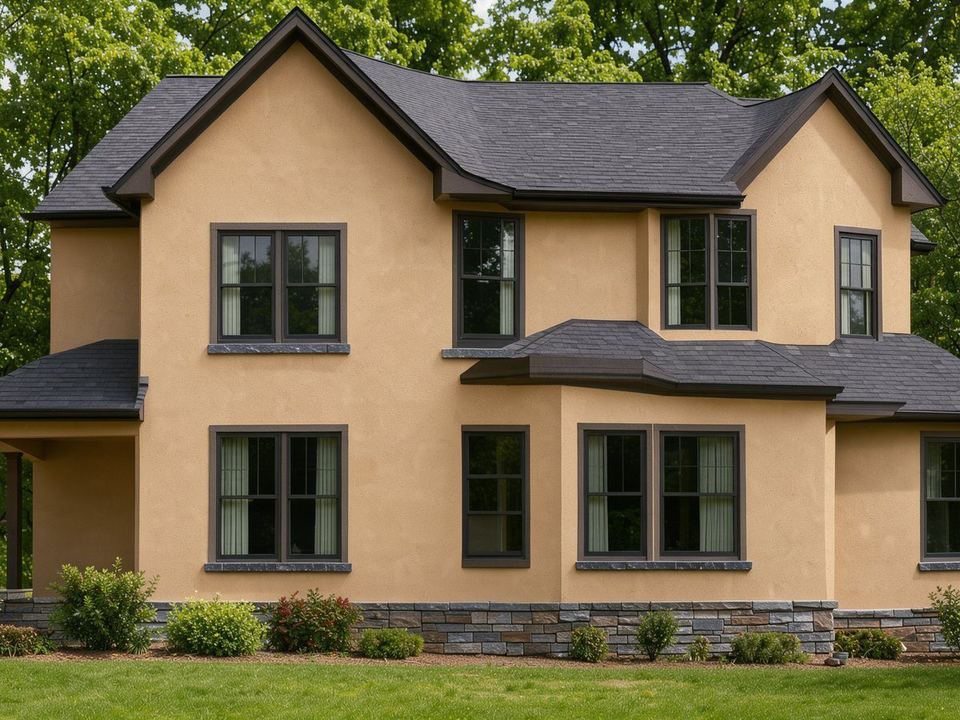
Patchwork repairs versus corner-to-corner refinishing
Refinishing and coating questions
Can weathered stucco simply be painted with regular exterior house paint?
Standard latex trim and siding paints often form thin, low-breathability films that peel where alkaline masonry moisture pushes outward, and they do nothing to fill pitted textures or bridge hairline cracks. Stucco walls hold up much better under coatings engineered for masonry—such as pure acrylic stucco finishes, high-build elastomeric membranes on modern cement, or breathable mineral silicate coatings on historic walls.
Does an elastomeric coating hide rough patches and mismatched textures?
Elastomeric coatings apply much thicker than house paint and bridge fine, non-moving craze cracks well, yet they still follow the contour of ridges, gouges and coarse patch lines underneath. If an elevation has raised caulk scars or mismatched patch textures, troweling a fiberglass-reinforced skim coat and fresh sand finish across the wall first is what flattens those differences.
How do you prepare chalky or mildew-stained stucco before recoating?
Topcoats bond to whatever sits on the wall, so preparation starts with low-to-moderate pressure washing and mildew cleaning without blasting holes in sound mortar. Once the wall dries thoroughly, loose paint flakes are scraped, open cracks and failed sealant joints are repaired, and chalky areas receive a masonry conditioner or primer so the new finish cures to an even sheen.
Can I change the color of unpainted or integral-color stucco?
Yes, either by troweling a newly pigmented acrylic or mineral finish coat over a primed base skim, or by applying two coats of a breathable masonry coating over clean, sound texture. Going from dark earth tones to pale off-whites or vice versa is straightforward once high-suction repairs are primed so old patch shapes do not ghost through.
Get an estimate to refinish your stucco
Send wide shots of each side you want recoated plus one close-up of the existing texture.
Communities where we refinish stucco
- Kingston
- Saugerties
- Port Ewen
- Rosendale
- Hurley
- Lake Katrine
- Woodstock
- Marbletown
- Esopus
- New Paltz
Other Ulster and Dutchess County towns by arrangement
Tired of old patch scars showing through paint?
Book spring work now. Winter assessments and estimates available.