KINGSTON STUCCOREPAIR & REFINISHING (home) Call or text (845) 443-7902 Free estimate

Stucco repair · Kingston & Ulster County

Cement stucco repair in Kingston and Ulster County

Delaminated sections, window-corner cracks, rusted lath and water leaks opened up, corrected at the flashing line and rebuilt in true stucco coats.

Call or text (845) 443-7902

Book spring work now. Winter assessments and estimates available.

Updated November 2026

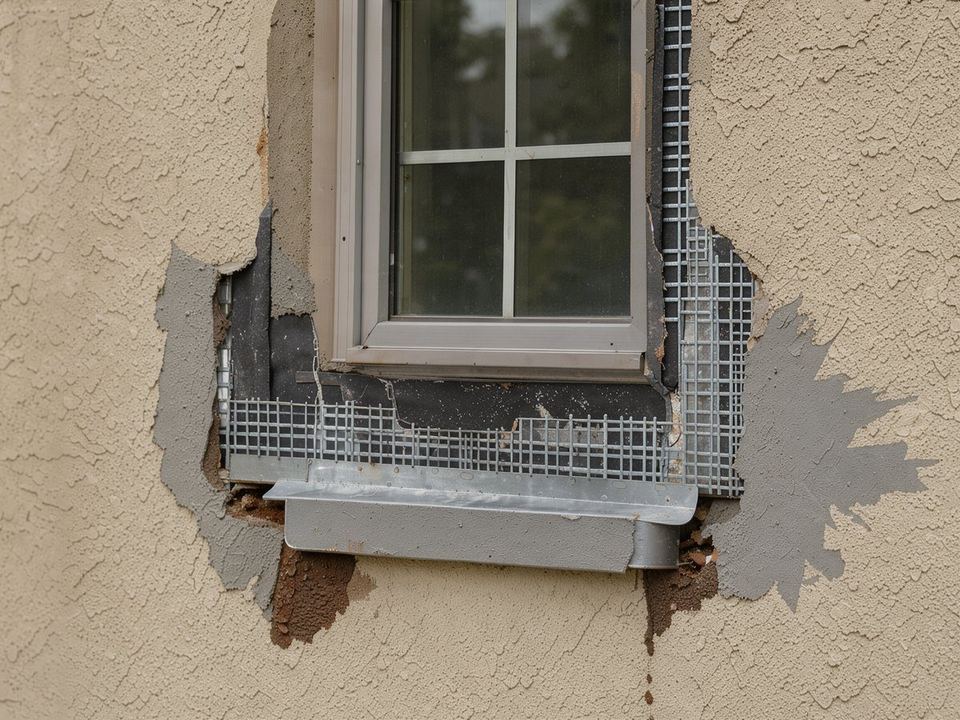
Cement stucco cut-out repair showing building paper, galvanized metal lath and fresh base coat beside a window

Short answer

Sound cement stucco rarely needs full replacement when one area fails. On homes and small commercial walls around Kingston, we cut back hollow or cracked sections to solid lath or masonry, fix missing flashing or corroded accessories, and rebuild the scratch, brown and finish coats to blend texture. Finish coats require roughly 40 °F and rising with 24 frost-free hours.

Key facts

Service area
Kingston and nearby Ulster County towns: Saugerties, Port Ewen, Rosendale, Hurley, Woodstock, Marbletown, Esopus and New Paltz.
Season
EIFS and stucco finishes need about 40 °F and rising, with no freezing for 24 hours. In the Hudson Valley that means spring through late fall.
Who does the work
Our own crews, from The Dom Construction Group LLC.
Insurance
General liability, umbrella and workers' compensation insurance; certificates on request.
Estimates
Free. Start with 3–5 photos by text, or use the form.
Reply
We reply within one business day, Monday to Friday.

What we open up and fix on hard-coat walls

Traditional cement stucco is roughly seven-eighths of an inch of sand, cement and lime keyed into lath or bonded directly to concrete block and brick. When the weather barrier and flashing stay dry, those coats last for decades on mid-century homes, additions, detached garages and low-rise storefronts around Midtown Kingston, Lake Katrine, Port Ewen and Saugerties. Trouble starts where water gets behind the shell and cannot drain out.

Our repair scope covers the failures that show up most often across Ulster County:

  • Diagonal cracks radiating from window and door corners where framing settles or casing beads were omitted
  • Hollow-sounding delaminated blisters where base coats pulled loose from masonry or rusted metal lath
  • Rot and soft wood sheathing below unsealed roof-to-wall intersections, deck ledgers and window sills
  • Spalled outside corners, garage jambs and bottom edges chewed up by snowblowers, trimmers or splash-back
  • Rust streaks bleeding from bare steel corner bead or fasteners installed instead of galvanized accessories

Where damage sits on a pre-war brick or stone building rather than a modern Portland cement wall, we switch to softer mixes; read how we approach older house lime stucco. For detached stacks and basement walls, see chimney stucco and foundation parging.

Telling solid cement stucco apart from EIFS

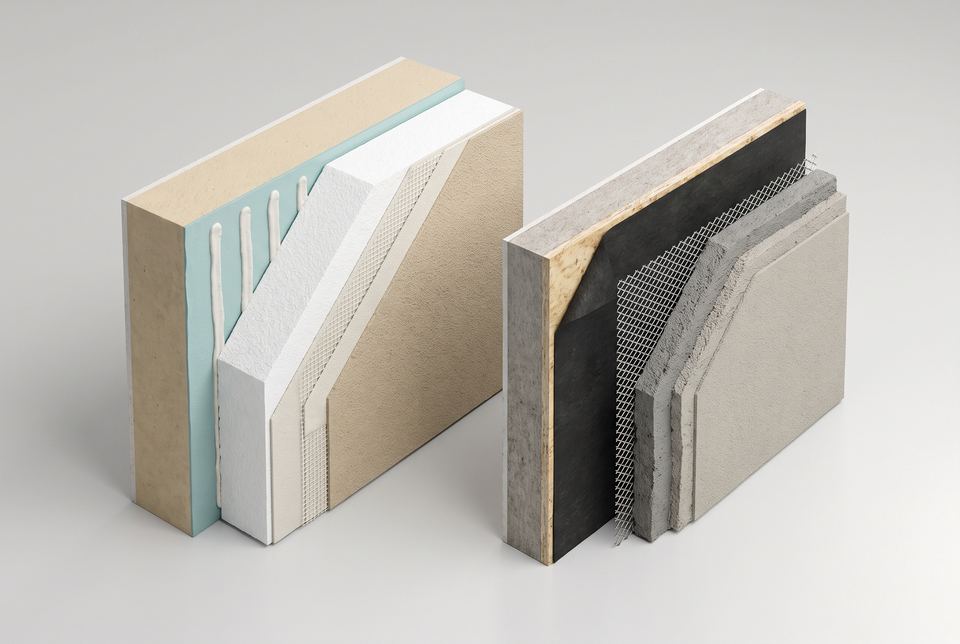
Many houses and small offices along Route 9W, Woodstock and New Paltz look like traditional stucco from the curb but are actually clad in EIFS—synthetic finish and fiberglass mesh over rigid foam insulation board. Knocking gently with a knuckle gives an immediate clue: cement stucco feels dense and stone-like, whereas EIFS sounds hollow and yields slightly under thumb pressure. Our crew repairs both systems, but packing rigid cement mortar into a flexible foam wall causes immediate perimeter cracking, so confirming the cladding type comes first.

Why smearing caulk into stucco cracks fails

Hardware-store elastomeric caulk squeezed over an open stucco crack leaves a shiny, dirt-catching ridge that low raking sunlight highlights across the whole yard, and it often seals moisture inside the wall rather than stopping the leak above it. Before we patch anything, we trace where water enters—whether a missing kick-out diverter at a gutter end, an open miter at a window head or a bridged weep screed at patio level, tying in proper flashing and joint sealants where needed. Fine craze lines that are purely cosmetic are handled differently; compare both in our guide to stucco cracks.

Curing times and the 40 °F weather rule

Lasting patches are built in lifts rather than packed in one thick pass. After cutting back to sound material with clean square edges and tying in new paper, flashing and lath, each base coat has to hydrate and shrink slightly before the finish texture goes on. Rushing finish over green mortar invites fresh shrinkage lines around the perimeter of the patch. When an elevation already carries several old repairs, blending a full-wall skim coat or elastomeric coating corner to corner hides texture transitions cleanly.

All cement and acrylic finish coats need ambient and wall temperatures around 40 °F and rising, with no freezing for at least 24 hours afterward. We inspect walls and write repair scopes year-round so spring work can be booked ahead of wet weather.
Clues that a stucco patch needs opening up

Surface appearance tells only half the story; sound and location reveal whether water has reached the lath.

Rust-brown streaks below a crack

Orange or dark brown staining weeping downward onto otherwise clean finish texture.

Usually means
Rainwater corroding galvanized metal lath, staples or corner bead behind the mortar.
What we do
Saw-cut back to clean metal, replace corroded lath or bead and rebuild base and finish coats.

Soft spots below roof-wall intersections

Stained, spongy or cracked stucco right where an eave or dormer meets a taller wall.

Usually means
Missing kick-out flashing letting gutter water pour directly behind the cladding.
What we do
Cut open the wet zone, replace rotted sheathing, install a kick-out diverter and re-stucco.

Separated mortar around window frames

Narrow gaps where hard stucco was troweled tight against vinyl, wood or clad window trim.

Usually means
Thermal expansion between dissimilar materials without a casing bead and sealant joint.
What we do
Cut a clean perimeter reveal or set casing bead, install backer rod and apply exterior sealant.

Crushed or flaking bottom edges

Broken stucco along garage jambs, patio slabs or mulch beds.

Usually means
Capillary moisture wicking up from paving or soil where weep screeds were buried or omitted.
What we do
Cut back above paving clearance, set a proper weep screed and patch in cement stucco lifts.

How we cut out and rebuild damaged stucco

Proper cement stucco patching restores the weather barrier, mechanical key and multi-coat thickness.

  1. Square cut-out to sound material

    We mask below the work area and cut back hollow or cracked mortar until we reach tight lath and dry sheathing.

  2. Flashing, paper and lath tie-in

    Damaged sheathing is replaced, weather-resistive barriers are lapped shingle-style and corrosion-resistant lath is fastened.

  3. Scratch and brown base lifts

    Base mortar is forced cleanly through the lath, scored, leveled to existing wall plane and given proper cure time.

  4. Texture match and perimeter blend

    Sand grit and float timing are tuned to the surrounding wall, followed by finish coat or coating once cured.

Drainage EIFS wall sample beside a three-coat cement stucco sample over metal lath

Questions about patching cement stucco

Will a localized stucco patch blend completely invisible on an older wall?

We match aggregate grit and float technique closely so the texture sits evenly with surrounding stucco, yet raw mortar color and weathered paint always show slight tonal variation under raking sunlight. When an elevation faces the street and seamless color matters, carrying a fresh finish coat or breathable masonry coating from corner break to corner break hides the repair outline cleanly.

How long does a cut-out cement stucco repair take from start to finish?

Most small-to-medium residential repairs take two to four site visits spread across several days rather than one continuous afternoon. Cutting out damaged mortar, installing flashing and lath, and placing base coats happen first; those base coats then need curing time to shrink and harden before the final texture or finish coat goes on so new cracks do not form.

Can you repair wood framing or sheathing rot found behind cracked stucco?

Localized soft plywood or OSB sheathing uncovered once wet stucco and lath come off is cut back to solid framing and replaced before new weather-resistive paper, flashing and metal lath go up. Because water hidden behind hard-coat stucco cannot always be measured until the wall is opened, written repair scopes spell out how concealed sheathing repairs are handled if uncovered.

Why are cracks forming at the bottom corners of almost every window?

Window and door openings concentrate framing movement and thermal stress at ninety-degree corners. When original installers ran metal lath straight past window corners without casing beads, control joints or diagonal stress relief, hard cement stucco inevitably relieves that tension with diagonal cracks. Stopping repeat leaks there often requires proper perimeter sealant joints and intact head flashing above the trim.

Should rusty metal corner bead be scraped and painted or cut out?

Once galvanized steel corner bead or lath rusts through and pushes stucco outward, scraping the surface rarely stops corrosion because moisture trapped inside the mortar keeps feeding the rust. Lasting repairs require cutting the stucco back on both faces of the corner, removing the corroded bead and fastening new corrosion-resistant galvanized or PVC trim before rebuilding the base coats.

Send wall photos for a repair quote

Include one tight photo of the damaged spot and one stepped-back view showing windows and roof edges above it.

Rather text? Text photos to (845) 443-7902

What are you seeing? (optional)
Add details (optional)
Property (optional)
How soon? (optional)
Best way to reply (optional)
Photos (optional, up to 5)

Add 3–5 photos: one close-up and one of the whole wall. We shrink them before sending.

    required. We reply within one business day, Monday to Friday. We use your details only to reply to this request. Privacy

    Rather text?

    (845) 443-7902

    Call or text Monday–Friday, 7 AM–5 PM.

    Towns where we repair stucco

    • Kingston
    • Saugerties
    • Port Ewen
    • Rosendale
    • Hurley
    • Lake Katrine
    • Woodstock
    • Marbletown
    • Esopus
    • New Paltz

    Other Ulster and Dutchess County towns by arrangement

    Unsure if a crack is shallow or structural?

    Book spring work now. Winter assessments and estimates available.